The Return of PWAs: Are Progressive Web Apps Finally Killing Native in 2026?
With recent shifts in web development frameworks and browser capabilities, PWAs are back in the spotlight. Here is why progressive web apps might finally replace native development for most businesses.
The Return of PWAs: Are Progressive Web Apps Finally Killing Native in 2026?
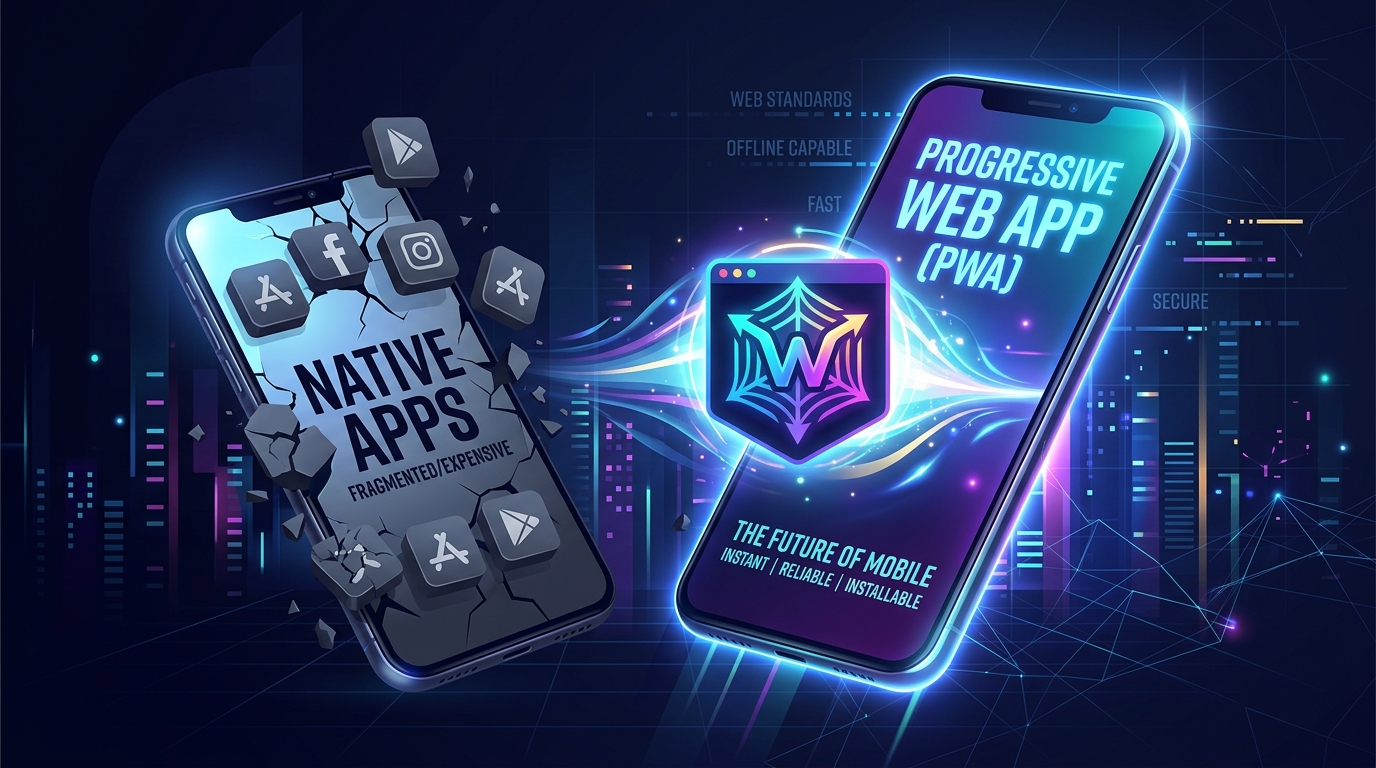
For years, the tech industry has been locked in a familiar debate: Web vs. Native.
Historically, native apps (Swift for iOS, Kotlin for Android) won the performance and capabilities battle, while web apps won the distribution and cost-to-build battle. But if you look at the trending discussions on developer Twitter and r/webdev in 2026, a massive shift has occurred.
Progressive Web Apps (PWAs) aren't just a buzzword anymore. Driven by stricter EU tech regulations, major shifts in browser capabilities, and the sheer cost of maintaining parallel codebases, PWAs are having a massive resurgence.
Are we finally seeing the death of the default native app?
What Changed in 2026?
The promise of PWAs—installable web applications that work offline and have access to device hardware—has existed for a decade. So why the sudden hype now?
1. The Regulatory Tsunami
The EU's Digital Markets Act (DMA) fundamentally changed the power dynamic of mobile operating systems. Apple and Google were forced to open up their ecosystems. Third-party browser engines on iOS became a reality, and Apple finally had to stop artificially nerfing web app capabilities to protect their App Store revenue.
Web Push Notifications on iOS, background sync, and native-level hardware APIs (Bluetooth, NFC) are no longer locked behind arbitrary restrictions. A PWA can finally do 95% of what a native app can do, on every device.
2. Framework Evolution (Next.js & Edge Computing)
Building a high-performance PWA used to be difficult. You had to manually configure complex Service Workers and caching strategies.
Now, frameworks like Next.js have abstracted the hardest parts of PWA development. With React Server Components, Edge Middleware, and seamless offline-first architectures, the performance gap between a web app and a native app is nearly indistinguishable to the average user. We can achieve sub-100ms load times globally.
3. The Economics of Development
Maintaining an iOS app, an Android app, and a web app requires three separate teams (or a massively complex React Native/Flutter monolithic setup). In a tech economy that is focusing heavily on efficiency and ROI, businesses are realizing they don't need a native app just to sell t-shirts or provide a SaaS dashboard.
Why pay the 30% App Store tax and maintain three codebases when a single Next.js codebase can serve a highly optimized, installable PWA to everyone?
When You Should Still Build Native
Despite the resurgence of PWAs, native development isn't entirely dead. There are still specific use cases where the App Store is necessary:
- Heavy Graphics & Gaming: If you are building the next Genshin Impact or an AR-heavy application, WebGL/WebGPU is impressive, but native graphics engines still hold the crown.
- Deep OS Integration: If your app needs to heavily manipulate system-level settings, run complex background processes permanently, or integrate deeply with custom hardware.
- App Store Discovery: For some consumer apps, the App Store is a primary marketing channel. People search the App Store to find a calorie tracker; they don't always Google it. (Though this advantage is shrinking as web SEO becomes more sophisticated).
E-Commerce: The Biggest Winner
For e-commerce, the PWA argument is now officially settled.
If you run a headless e-commerce store, forcing your users to go to the App Store, download a 150MB app, and create an account just to buy a product creates immense friction.
With a PWA, a user clicks a link on Instagram, the site loads instantly at the edge, they click "Add to Home Screen," and you now have a permanent icon on their phone. You can send them push notifications for abandoned carts without them ever touching the App Store.
It’s seamless, it bypasses platform fees, and the conversion rates speak for themselves.
The Bottom Line
The era of building a native app "just to have an app" is over. In 2026, the default assumption should be to build a high-performance web app first.
Master modern web development, embrace edge computing, and build PWAs. The web has finally won.

Shihabul Islam
Full Stack Software Engineer